
Local history at the entrance to Sooke
The Museum Is Changing, but the Grounds Remain Worth Visiting
The Sooke Region Museum and Visitor Centre sits on Phillips Road near the eastern entrance to town. Its red lighthouse has become one of Sooke’s most recognizable landmarks, but the grounds also hold forestry, maritime and settlement history that helps explain how the region developed.
As of August 2026, the museum’s indoor exhibits are temporarily closed for a major refresh, with the renewed displays expected to be revealed in 2027 for the museum’s 50th anniversary. The Visitor Centre, gift and book shop, outdoor exhibits and museum grounds remain available. Check the museum’s official website for current hours, events and tour access before visiting.
What Is Open During the Exhibit Refresh?
The museum continues to welcome visitors through its Visitor Centre and shop, while the outdoor grounds remain an important part of the experience. The museum lists displays connected with maritime history, forestry, the historic flowline, heritage buildings and equipment.
The exact availability of interior tours for the lighthouse or Moss Cottage can vary. Rather than promising access on a particular day, contact the museum or review its current visitor information before planning around a tour.
The Triangle Island Lighthouse Display
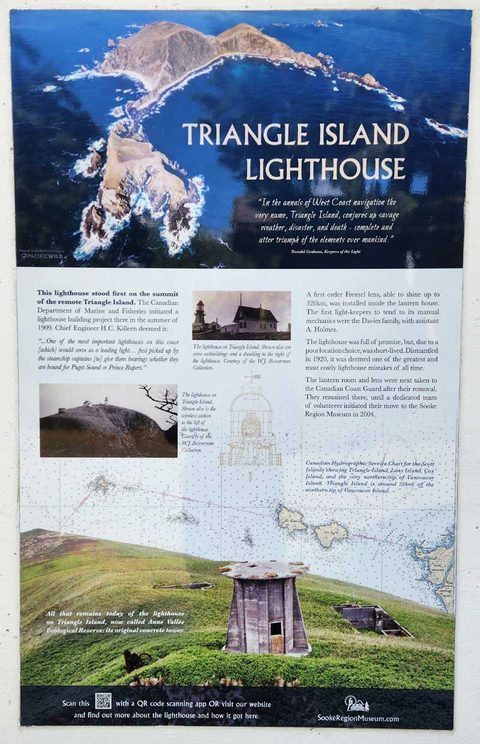
The display combines historic lighthouse equipment from two West Coast stations. The cast-iron and glass lantern came from Triangle Island, while the large First Order Fresnel lens was originally used at Estevan Point. The lantern and lens were moved to Sooke and installed on a concrete tower built on the museum grounds.
The museum dedicated the exhibit in 2005 to lighthouse keeper families and the mariners connected with British Columbia’s coastal history.
Why Triangle Island Was Difficult
Triangle Island lies off the northern end of Vancouver Island. A lighthouse was built there in 1910 at a very high elevation. The powerful light could reach a great distance, but cloud and fog often obscured it from the mariners it was meant to guide.
The remote station exposed lightkeepers and their families to severe weather and difficult supply conditions. The station was decommissioned and dismantled after a short operating life. The museum’s display preserves the lantern and the story of those who lived and worked in that demanding setting.
A Fresnel Lens Up Close
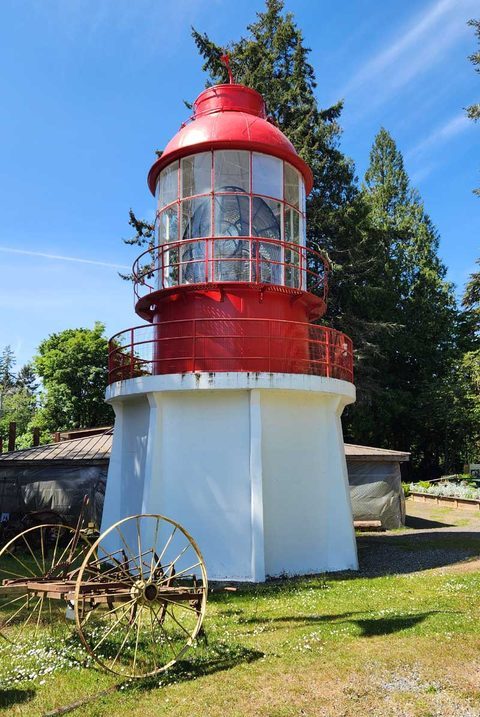
Fresnel lenses were designed to concentrate light into a powerful beam without the weight of a solid glass lens. The First Order lens at the museum is among the largest class used in lighthouses and gives visitors a close view of technology that once helped ships navigate the coast.
It's easy to see why the structure became a Sooke landmark. The tower is visually simple, but the history behind the lantern, lens and people who maintained remote light stations is much larger.
Other Outdoor Displays
The grounds include forestry history, heritage buildings and equipment, information about the Sooke flowline and maritime displays. The museum’s outdoor-exhibit guide is the best place to confirm what is currently available.
I think the grounds are especially useful for newcomers because they connect present-day Sooke with the industries, transportation and coastal conditions that shaped the region.
Sheringham Point Is a Different Lighthouse Experience
The lighthouse on the museum grounds should not be confused with Sheringham Point Lighthouse in Shirley, west of Sooke. Sheringham Point is a National Heritage Lighthouse cared for by a preservation society at its coastal site. It offers a forest-and-shoreline visit rather than a museum display.